

Promoting wine and meat alongside the cancer action plan
2026-11-12
The resolution on the EU’s promotion policy for agricultural and food products was adopted by 476 votes to 83, with 42 abstentions. The EPP voted alongside the ECR, PfE and ESN, whilst the S&D and Renew also supported it. The Greens/EFA voted against it. The text rejects restrictions on the promotion of certain products and calls for equal treatment for high-quality wines and red meat. On the same day, 330 of its supporters also backed a resolution on the plan to combat cancer, which aims to limit exposure to alcohol advertising and tackle excessive consumption of red and processed meat.
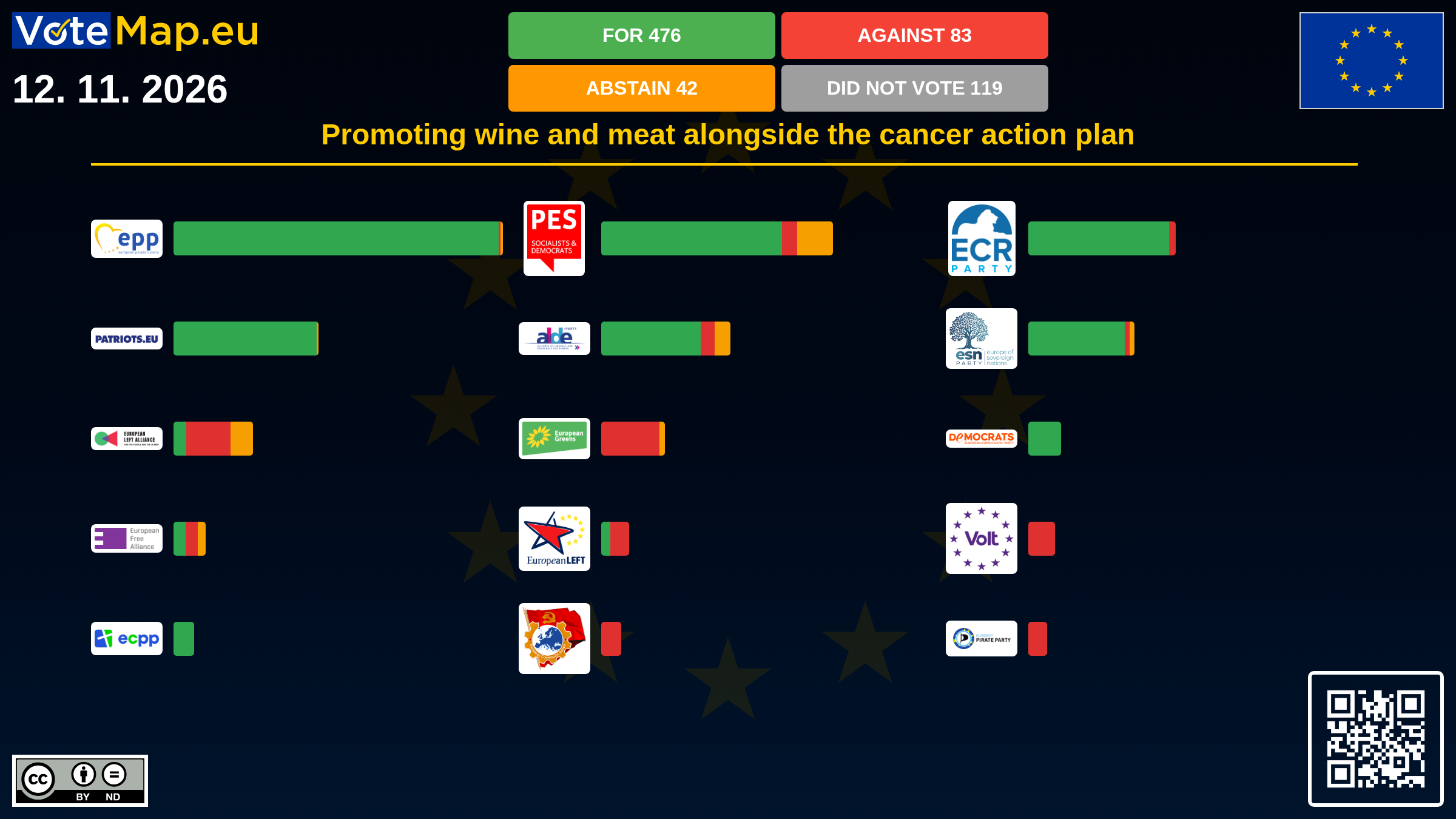
The resolution concerns the EU’s promotion policy, namely the funds the Union uses to support the promotion of European agricultural and food products. The report was drawn up by the Committee on Agriculture and Rural Development, with Salvatore De Meo (EPP) as rapporteur. The resolution was adopted by 476 votes to 83, with 42 abstentions.
It was supported by the EPP (156 in favour, 1 against, 1 abstention), the S&D (85 in favour, 11 against, 17 abstentions) and Renew (55 in favour, 5 against, 7 abstentions). The fourth group in the pro-European majority, the Greens/EFA, voted against: 35 against, 4 abstentions, none in favour. The EPP voted alongside the ECR (67 in favour, 3 against), PfE (67 in favour, 1 abstention) and ESN (all 23 in favour). Votes from the far right did not decide the outcome; without them, the resolution would have passed by a margin of 319 to 80. The Left voted mostly against (4 in favour, 24 against, 10 abstentions).
The crux of the text lies in Article 13. According to this, promotion policy must remain an economic instrument and “should not be restricted by other Union policies, as this could undermine its effectiveness and the competitiveness of European producers”. The resolution opposes the introduction of new criteria for access to funding or “any exceptions or restrictions concerning the promotion of certain types of products” and calls for equal treatment of all sectors, “including quality wines and red meat”. Recital G states that “promotional campaigns can influence food choices”, and regarding meat, dairy products and wine, it states that these form part of Europe’s cultural heritage and ‘should not be discriminated against or stigmatised in future promotional work programmes’. In § 14, the text emphasises that “according to WHO guidelines, the consumption of foods of animal origin is important for promoting nutrient intake”. The word ‘alcohol’ does not appear in the resolution; the European Plan to Combat Cancer is mentioned only in the list of reference documents in the introduction.
On the same day, the Chamber of Deputies also voted on a resolution on the European Plan to Combat Cancer, which was passed by 447 votes in favour, 66 against and 91 abstentions. Recital AA of the resolution notes that the IARC classifies ethanol contained in alcoholic beverages and the acetaldehyde produced from it “as carcinogenic to humans”. Recital T lists, amongst modifiable risk factors whose elimination could prevent 40 per cent of cancer cases, alongside tobacco and an unhealthy diet, the item ‘harmful alcohol consumption, particularly in quantities exceeding scientifically proven health recommendations’. In paragraph 31 of the resolution, it calls on the Commission to introduce stricter measures, “which would limit exposure to alcohol advertising, including in the digital environment”, and calls for regulation that would prohibit the advertising and sponsorship of alcoholic beverages “in cases where minors might be among the target audience”. In paragraph 35, it calls on the Commission to expedite the introduction of mandatory standardised nutritional labelling on the front of packaging, amongst other things “with the aim of addressing the excessive consumption of red and processed meat in line with public health recommendations”.
Of the 476 MEPs who supported the resolution on advertising, 330 voted in favour of both resolutions. By political group, this comprises 148 MEPs from the EPP, 82 from the S&D, 54 from Renew, 20 from PfE, 11 from the ECR and 4 from The Left; the remaining 11 are non-attached.