Europe's technological sovereignty
2026-01-22
The European Parliament is calling for the EU to rid itself of its dangerous dependence on non-European digital technologies. MEPs want a stronger European industry, its own infrastructure and the ability to make decisions without pressure from global players.
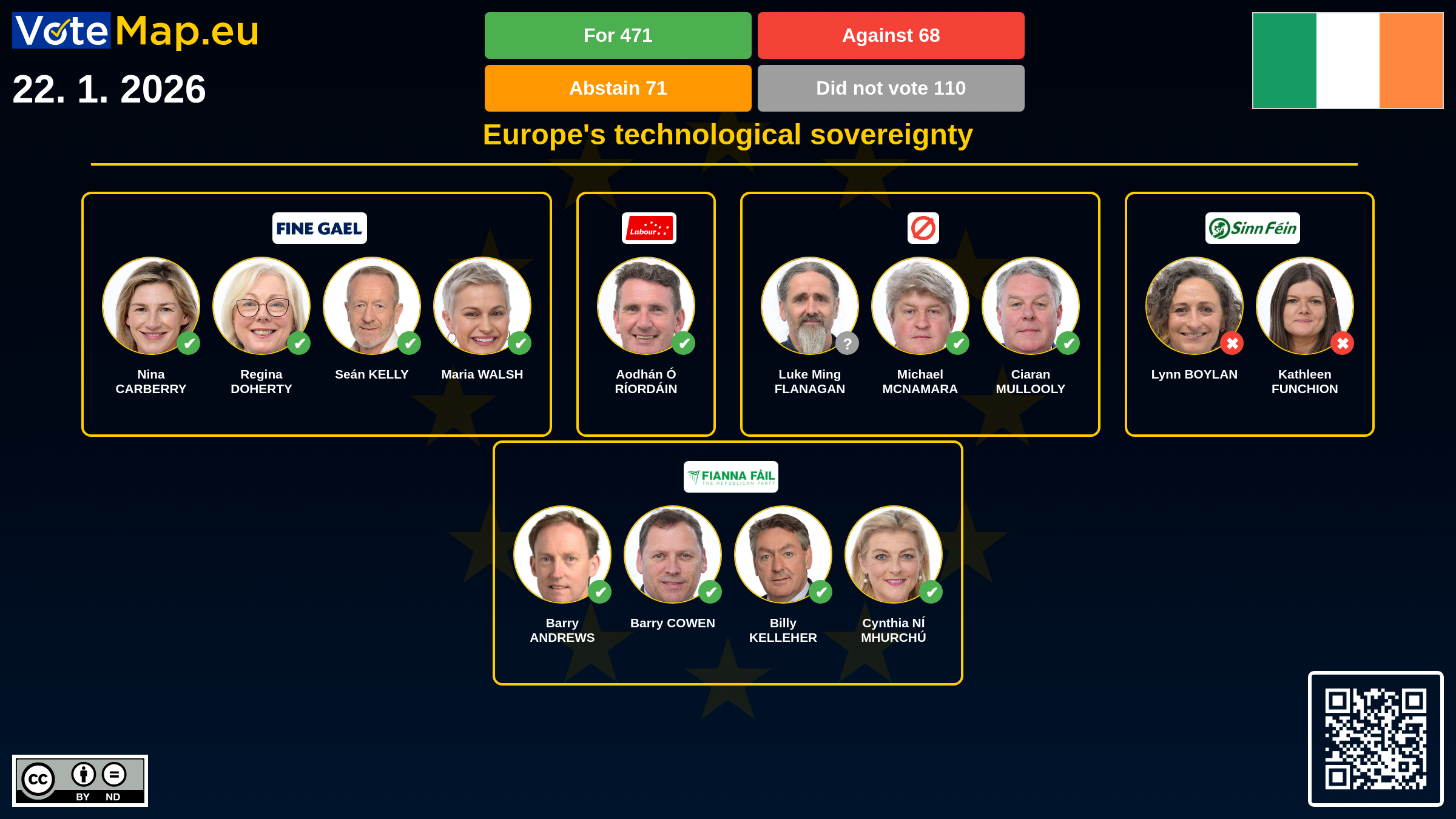
The European Parliament has adopted a position defining technological and digital sovereignty as a key condition for the security, prosperity and democratic resilience of the European Union. According to MEPs, the EU currently relies too heavily on foreign suppliers in critical areas such as cloud services, semiconductors, artificial intelligence and cyber security.
Parliament warns that the growing concentration of power in the hands of non-European companies is limiting Europe's ability to innovate, protect its data and maintain control over the digital economy. According to MEPs, this poses a risk not only to competitiveness, but also to the functioning of democracy and the security of critical infrastructure.
The solution is to be a targeted European industrial policy focused on strategic technologies of the future, such as semiconductors, quantum technologies and secure digital infrastructure. The EU should strengthen its own research, production and innovation, reduce the bureaucratic burden and create a more attractive environment for investment and the development of technology companies.
At the same time, Parliament stresses that technological sovereignty does not mean closing oneself off from the world. On the contrary, it should be about the ability to cooperate with trusted partners, diversify supply chains and maintain the openness and interoperability of digital solutions. However, the ability to make autonomous decisions without strategic pressure from outside is key.
MEPs therefore call on the European Commission to draw up an overview of critical digital dependencies and propose specific measures, including the targeted use of public procurement, to support European technologies and strengthen the Union's long-term resilience.
We collect and visually present data publicly available at the page of European Parliament. Votemap.eu denies any responsibility for possible inconsistencies of the data or its changes after the publication.
Descriptions are created using DeepL Translate machine translation. We apologize for any possible imperfections or inconvenience.