Development cooperation and the causes of irregular migration
2026-06-16
A resolution on how EU development cooperation should address the root causes of irregular migration in partner countries was adopted: 344 MEPs voted in favour, 237 against and 66 abstained. The S&D, Renew and Greens/EFA groups supported it, whilst the EPP was divided, despite the report having been drafted by its rapporteur, Lukas Mandl: almost all Polish EPP MEPs voted against it, whilst almost all Spanish EPP MEPs abstained. PfE, ESN and The Left were against it, as were most of the ECR, although 27 of its MEPs abstained.
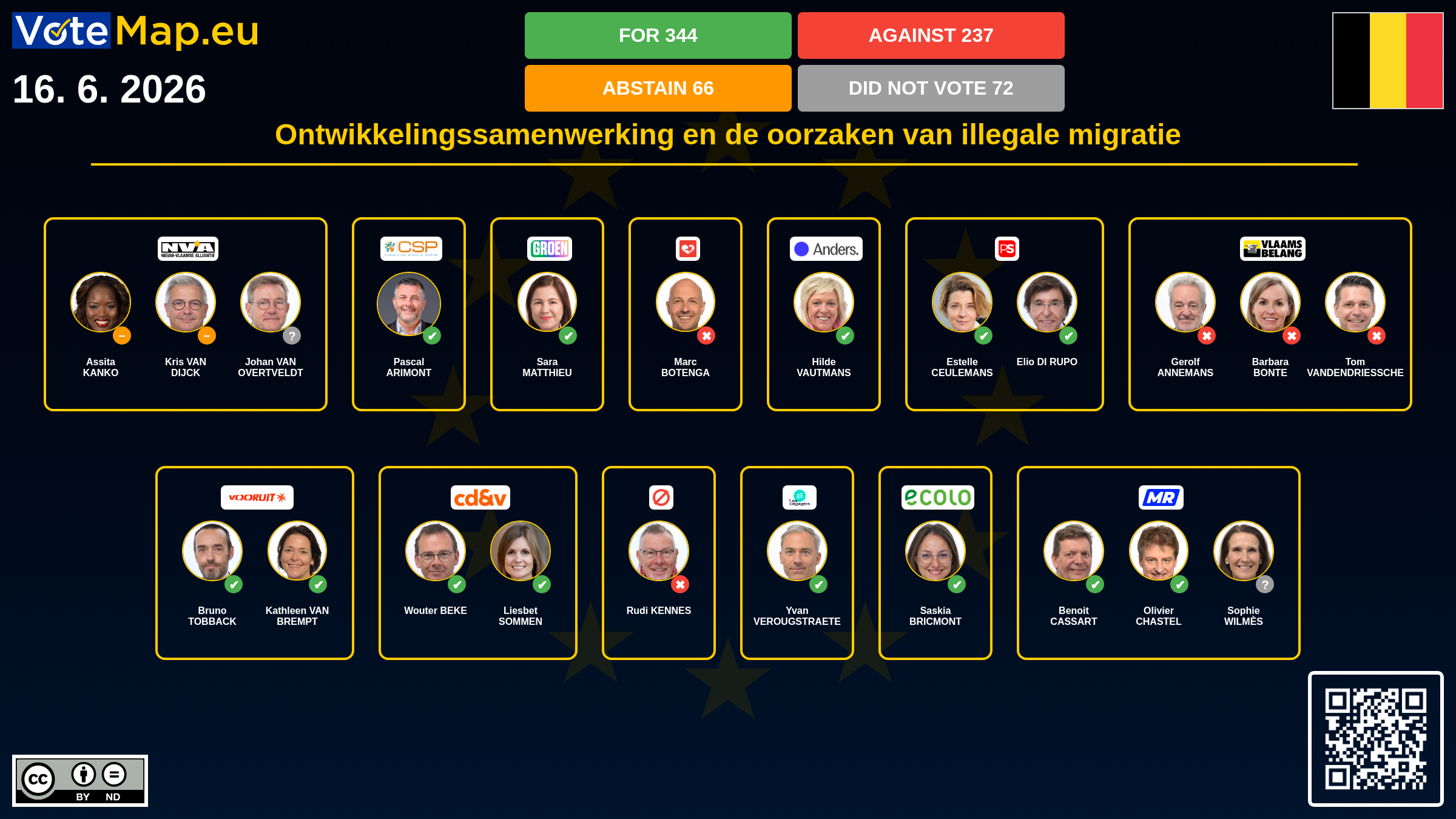
The European Parliament’s plenary session adopted a resolution on an own-initiative report by the Committee on Development (DEVE). The report addresses how to strengthen EU development cooperation so that it helps to tackle irregular migration and its root causes in partner countries. The rapporteur was Lukas Mandl (EPP). 344 MEPs voted in favour, 237 against and 66 abstained. Prior to this, the plenary had rejected an alternative motion for a resolution tabled by the ESN Group.
The resolution is based on the premise that migration and development cooperation are interlinked. It calls on the Commission and the Member States to continue to promote policy coherence for development in their migration policies, whilst fully respecting human rights. According to the text, development aid should prioritise the eradication of poverty, the reduction of inequalities and long-term investment in line with the needs of partner countries. This includes education and vocational training, decent jobs, agriculture, water and renewable energy sources.
The text calls for the fight against people smuggling and human trafficking to be conducted in closer cooperation with partner countries. At the same time, it advocates legal channels for safe migration and labour mobility. It points out that strict border controls without alternative legal routes alter migration routes. Migrants then become more frequent victims of people-smuggling networks, extortion and violence. The resolution also notes that the number of unauthorised crossings of the EU’s external borders fell by 26 per cent in 2025 to almost 178,000, and that the majority of migrants arrive in Europe legally.
The resolution “strongly criticises the drastic cuts to official development assistance made by the world’s leading donors”. The text does not specify which donors are referred to. It calls on the EU and its Member States to honour their commitment to spend 0.7 per cent of gross national income on official development assistance.
The S&D, Renew and Greens/EFA – three of the four groups comprising the pro-European majority – supported the resolution. The S&D group had 121 votes in favour and 5 abstentions; Renew had 65 in favour, 1 against and 2 abstentions; and the Greens/EFA had all 48 votes in favour. Their shadow rapporteurs were Marco Tarquinio (S&D), Abir Al-Sahlani (Renew) and Erik Marquardt (Greens/EFA).
The EPP was divided in its vote, even though the report had been drafted by its rapporteur: 104 MEPs voted in favour, 32 against and 21 abstained. Twenty-two EPP MEPs from Poland voted against – that is, the entire Polish delegation with one exception – including MEPs from the Civic Coalition (KO). Also voting against were four MEPs from France, including members of Les Républicains, three from Slovenia, and one each from Bulgaria, Denmark and Sweden. Eighteen EPP MEPs from Spain – almost the entire Spanish delegation, including members of the People’s Party (PP) – abstained, as did one each from Germany, France and Slovakia.
The PfE (all 76 MEPs) and the ESN (all 24) voted against. The ECR was not united: 48 of its MEPs voted against, 27 abstained and one voted in favour. The far right therefore rejected the resolution, but not as a unified bloc. The Left, the far left, also voted against (42 against, 2 abstentions). There was no cooperation between the EPP and the far right in this vote: of the 344 votes in favour, 338 were cast by the pro-European majority.
We collect and visually present data publicly available at the page of European Parliament. Votemap.eu denies any responsibility for possible inconsistencies of the data or its changes after the publication.
Descriptions are created using DeepL Translate machine translation. We apologize for any possible imperfections or inconvenience.