A multiannual plan for fisheries in the Baltic Sea
2026-05-21
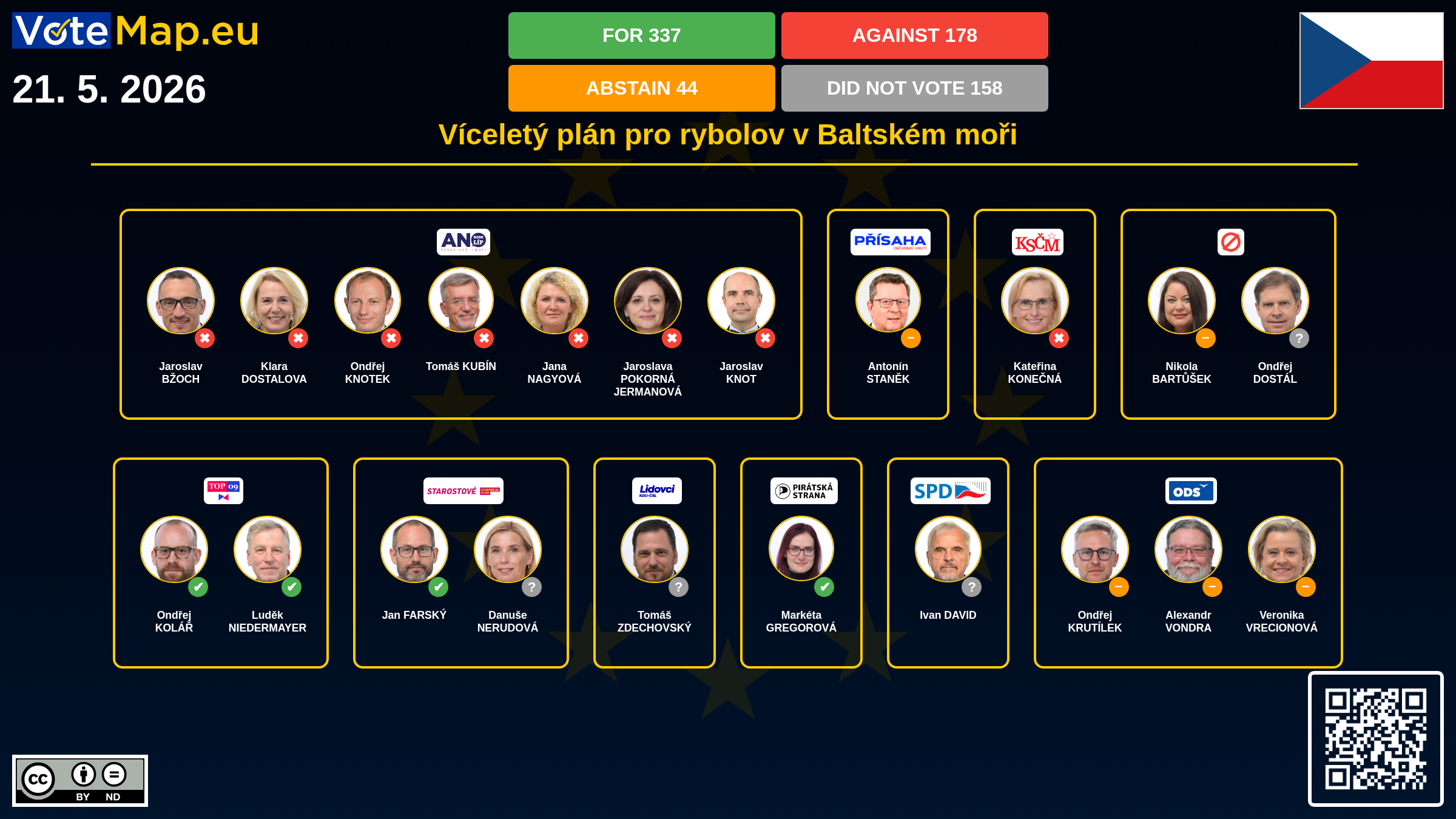
The resolution on the multiannual plan for fisheries in the Baltic Sea was adopted by 337 votes in favour, 178 against and 44 abstentions. The report by Isabella Lövin (Greens/EFA) was unanimously supported by the S&D, Renew and Greens/EFA groups, as well as the majority of the EPP; the main dissenting voices within the EPP were MEPs from Poland’s Koalicja Obywatelska and Spain’s Partido Popular. The ECR, PfE and ESN voted against. The resolution notes that the current plan has failed to restore fish stocks and calls for its evaluation and, if necessary, revision.
The resolution is based on an own-initiative report drawn up by the rapporteur, Isabella Lövin (Greens/EFA), in the Committee on Fisheries. It assesses the 2016 regulation, which introduced a multiannual plan for cod, herring and sprat stocks in the Baltic Sea. The conclusion is critical: according to the text, the plan achieved its environmental and socio-economic objectives only to a very limited extent, and fish stocks have not been restored to above the reference level.
According to the resolution, cod stocks are in a very poor state, even though targeted fishing for cod has been discontinued since 2019. The Baltic Sea is warming at twice the global average rate for the world’s oceans. Furthermore, the sea is suffering from eutrophication, pollution and chemical munitions on the seabed.
The resolution calls on the Commission and the Member States to move to a phase of fish stock recovery when implementing the plan. According to the text, the Council is to set total allowable catches in accordance with the precautionary approach. For herring and sprat, a moratorium should be considered as a matter of urgency to allow stocks to recover. The resolution also proposes halting trawl fishing for the production of fishmeal and fish oil during the recovery period. The Commission is to set up a special fund for the recovery and transformation of Baltic fisheries. Together with the Member States, it is to prioritise improving the situation of small-scale coastal fishermen. Small-scale coastal fishing accounts for 92 per cent of vessels in the Baltic Sea.
The resolution also addresses Russia. It condemns Russia’s irresponsible, unsustainable and unscientific exploitation of Baltic fish stocks. According to the text, Russia unilaterally sets quotas above the maximum sustainable yield. The resolution also strongly condemns the growing presence of the Russian ‘shadow fleet’, which increases the risk of oil spills, and calls for the full enforcement of sanctions against Russia.
The S&D (97 votes), Renew (65) and Greens/EFA (43) supported the resolution without a single vote against or abstention. Within the EPP, there were 100 votes in favour, 12 against and 18 abstentions. Ten MEPs from Poland’s Koalicja Obywatelska voted against, whilst four others abstained. Fourteen MEPs from Spain’s Partido Popular also abstained. The ECR (4 in favour, 53 against, 9 abstentions), PfE (0 in favour, 76 against, 1 abstention) and ESN (0 in favour, 21 against, 3 abstentions) – that is, the far right – voted against. The EPP therefore did not vote with them. The Left, that is, the far left, voted split: 20 in favour, 9 against, 8 abstentions.
Rapporteur Isabella Lövin (Greens/EFA) stated during the debate that the compromise sends a strong and clear message to the Commission and the Member States: the Baltic Sea can no longer afford to carry on as before. EPP shadow rapporteur Niclas Herbst described the state of the Baltic Sea as critical. He also commended the rapporteur for incorporating conservative positions. S&D shadow rapporteur Sofie Eriksson pointed out that scientists describe the sea as a sick patient. Emma Wiesner (Renew) emphasised that this is the first time Parliament has taken such a stance. The quotes have been translated from English, German and Swedish.
We collect and visually present data publicly available at the page of European Parliament. Votemap.eu denies any responsibility for possible inconsistencies of the data or its changes after the publication.
Descriptions are created using DeepL Translate machine translation. We apologize for any possible imperfections or inconvenience.