

Extension of message scanning due to child abuse
2026-03-26
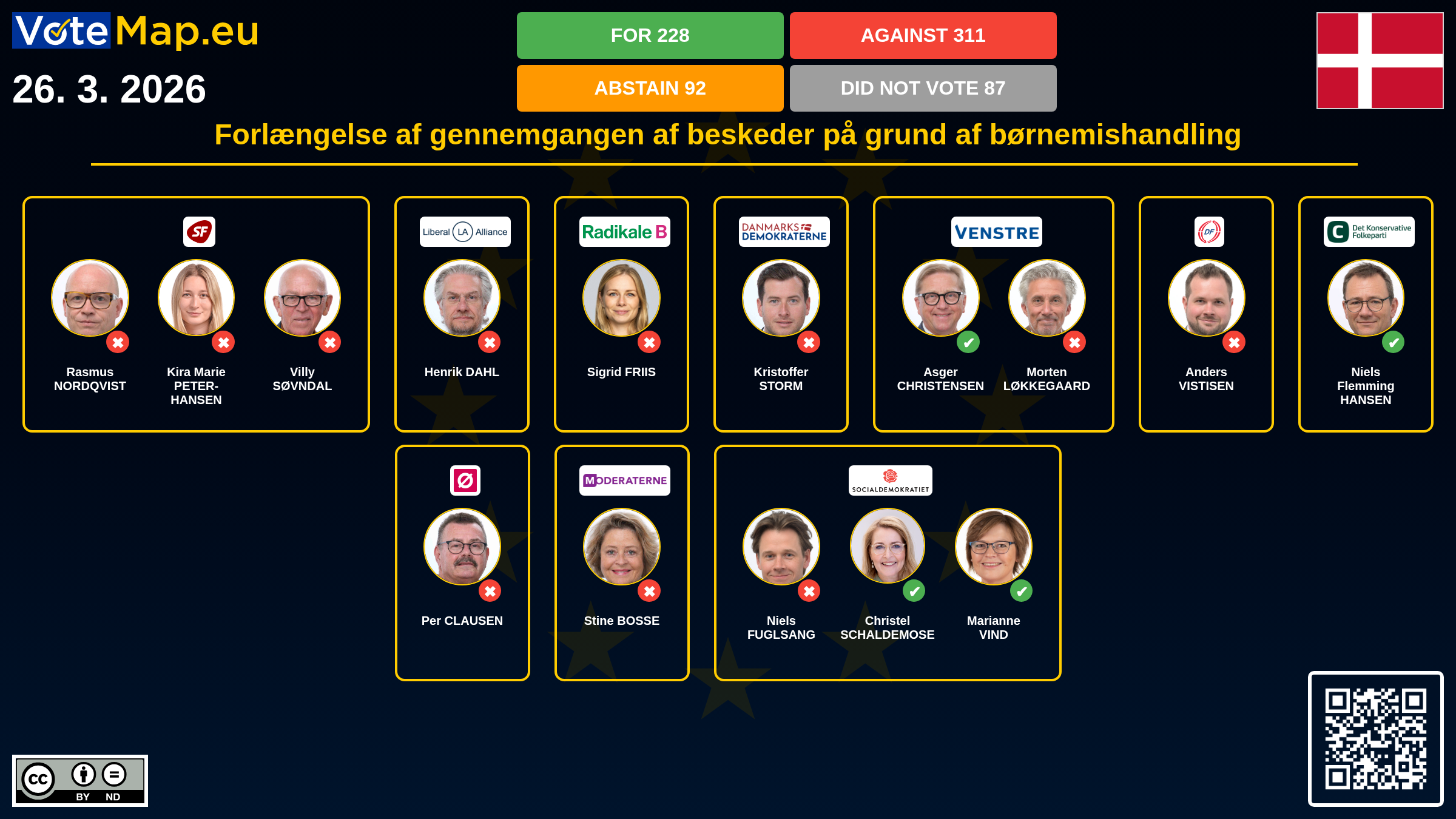
The proposal to extend the temporary derogation, which allowed communications service providers to voluntarily scan private messages for child sexual abuse material, was rejected: 228 votes in favour, 311 against, 92 abstentions. The pro-European majority was split – the EPP and Greens/EFA voted against, the S&D in favour, and Renew was divided. The exemption expired on 3 April 2026. However, the dispute did not end there.
Regulation (EU) 2021/1232 has been in force since 2021. It is a temporary derogation from two articles of the ePrivacy Directive. It allows providers of person-to-person communication services to voluntarily scan the content of private messages in order to detect, report and remove child sexual abuse material. In public debate, it is referred to as ‘Chat Control 1.0’. The exemption was due to expire on 3 April 2026. The European Commission therefore proposed in December 2025 to extend it until 3 April 2028, pending the adoption of a long-term regulation.
The proposal was voted on in two stages. First, on 11 March 2026, the Parliament approved the Commission’s proposal as amended by its own amendments (458 in favour, 103 against, 63 abstentions). These amendments shortened the extension to August 2027 and added conditions, including the exclusion of communications protected by end-to-end encryption and stricter proportionality requirements. The dossier was then referred back to the Committee on Civil Liberties, Justice and Home Affairs (LIBE) for negotiations with the Council. However, the negotiations did not lead to an agreement. In the final vote on the Commission’s proposal and the amendments as a whole, a simple majority of the votes cast was sufficient. The proposal failed to secure this: 228 MEPs voted in favour, 311 against and 92 abstained. This concluded the first reading, and the temporary derogation expired on 3 April 2026.
The pro-European majority was divided, cutting across the usual left-right divide. The EPP voted against (22 in favour, 137 against, 5 abstentions). It did not issue a statement on this vote, so its reasons are unknown from available sources. The Greens/EFA also voted against (3 in favour, 33 against, 11 abstentions). The S&D, for which rapporteur Birgit Sippel led the dossier, voted in favour (95 in favour, 8 against, 2 abstentions). It did not issue a separate statement on the vote. Renew was split in its vote: 32 in favour, 29 against and 6 abstentions. We do not have a specific statement from it regarding this particular vote.
The fact that the EPP and Greens/EFA ended up on the same side does not mean they did so for the same reasons. We have documented justifications only from the Greens/EFA. MEP Markéta Gregorová (Pirates, Greens/EFA) stated in the group’s press release on the result: “Chat Control 1.0 will end on 3 April without replacement. The European Parliament has sent a clear signal: it is time to end this ineffective and disproportionate exemption from the privacy rules.” (translation by Votemap)
The ECR, PfE and ESN – that is, the far right – were not united. Within the ECR, the majority abstained (35 MEPs), 27 voted in favour and 12 against. In the PfE, 40 MEPs voted in favour, 18 against and 24 abstained. The ESN was against: 25 voted against, 3 abstained and none voted in favour. The far left, The Left, voted against (4 in favour, 33 against).
However, the legislative process did not end there. The procedure continued and was concluded in July 2026 by Regulation (EU) 2026/1881, applicable until 3 April 2028. This was a different text, on which a separate vote was held.
We collect and visually present data publicly available at the page of European Parliament. Votemap.eu denies any responsibility for possible inconsistencies of the data or its changes after the publication.
Descriptions are created using DeepL Translate machine translation. We apologize for any possible imperfections or inconvenience.
