Genetically modified maize MON 87460: objection to the renewal of the import authorisation in the European Parliament
2026-09-16
By 433 votes to 159 (with 10 abstentions), the Parliament called on the European Commission not to renew the authorisation for the import of genetically modified maize MON 87460 for food and feed – this does not concern cultivation within the EU. The motion was supported by the S&D, Renew and Greens/EFA groups, whilst the majority of the EPP voted to keep the authorisation in force; the ECR, PfE, ESN and The Left also joined those opposed to the import. 84 per cent of MEPs voted. The resolution is not legally binding on the Commission.
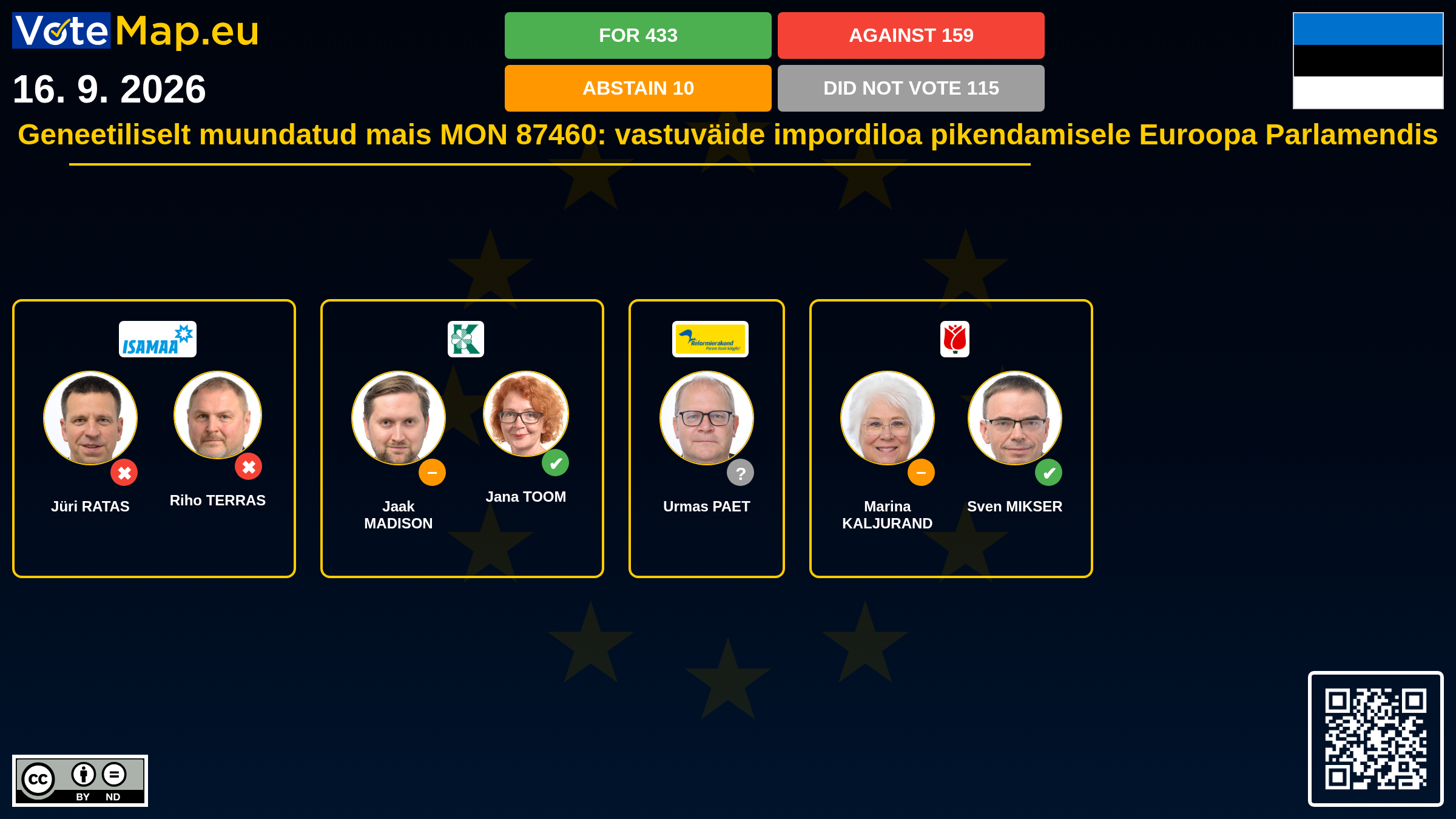
On Wednesday 16 September 2026, the European Parliament opposed the European Commission’s plan to renew the authorisation for the import of genetically modified maize MON 87460 for food and feed. This does not concern authorisation to grow this maize in fields within the EU – this has been excluded from the authorisation since it was first granted in 2015 and remains excluded in the application for renewal submitted by the manufacturer, Bayer CropScience. The EFSA, however, recommended the renewal, stating that it had not identified any new risks compared with the original assessment.
Parliament did not decide on the matter as if it were a law of its own, but by means of an objection under Rule 115 of the Rules of Procedure – a tool by which it can express its disagreement with what the Commission is planning under the so-called comitology procedure. 433 MEPs voted in favour of the objection, 159 against, and a further 10 abstained; 84 per cent of the 717 seats were filled.
Behind these figures lies a breakdown that is worth noting. The S&D and Greens/EFA voted in favour of the objection by a clear majority, whilst Renew did so by only a narrow margin – the group was effectively split down the middle. The EPP, by contrast, is the only one of the four major pro-European groups where the majority voted the other way – against the objection, and thus in favour of keeping the import authorisation in force; however, a minority of EPP MEPs joined the other three groups.
The ECR, PfE, ESN and The Left also joined the camp supporting the objection – all voted predominantly against resuming imports. This was not the usual pattern, where the EPP votes alongside the far right: here, on the contrary, the majority of the EPP found themselves outside this broad coalition, on the opposite side to the ECR, PfE and ESN.
The motion for a resolution has neither a formal rapporteur nor a shadow rapporteur – this role does not exist for objections under Rule 115. The text was co-signed by four MEPs from different groups (EPP, S&D, Greens/EFA and The Left); Renew did not appear among the co-sponsors, although the majority of its MEPs voted in favour of the objection during the vote itself.
The adopted resolution is a political appeal, not a veto. It is not legally binding on the Commission, and similar objections from Parliament have not deterred the Commission in the past – authorisation for GMOs has always ultimately been granted, even though Parliament has repeatedly protested against it. The decision on whether to renew the authorisation will ultimately be taken through the comitology procedure: a vote by Member State representatives in the Standing Committee, or where applicable in the Appeal Committee, and if no qualified majority is found to oppose it, the Commission may grant authorisation at its own discretion. In similar resolutions, the Parliament has long been calling for a reform of this decision-making process – so far to no avail.
We collect and visually present data publicly available at the page of European Parliament. Votemap.eu denies any responsibility for possible inconsistencies of the data or its changes after the publication.
Descriptions are created using DeepL Translate machine translation. We apologize for any possible imperfections or inconvenience.