Free emission allowances for industry 2026–2030
2026-10-22
A change to the EU Emissions Trading Scheme (ETS), which increases the number of free allowances for industry for the period 2026–2030, was passed by 474 votes in favour, 82 against and 28 abstentions. The EPP voted alongside the ECR, PfE and ESN, whilst the S&D and Renew also backed the proposal. The Greens/EFA voted overwhelmingly against it and, together with The Left, also supported the rejection of the Commission’s entire proposal, which was not adopted. The pro-European majority was thus divided.
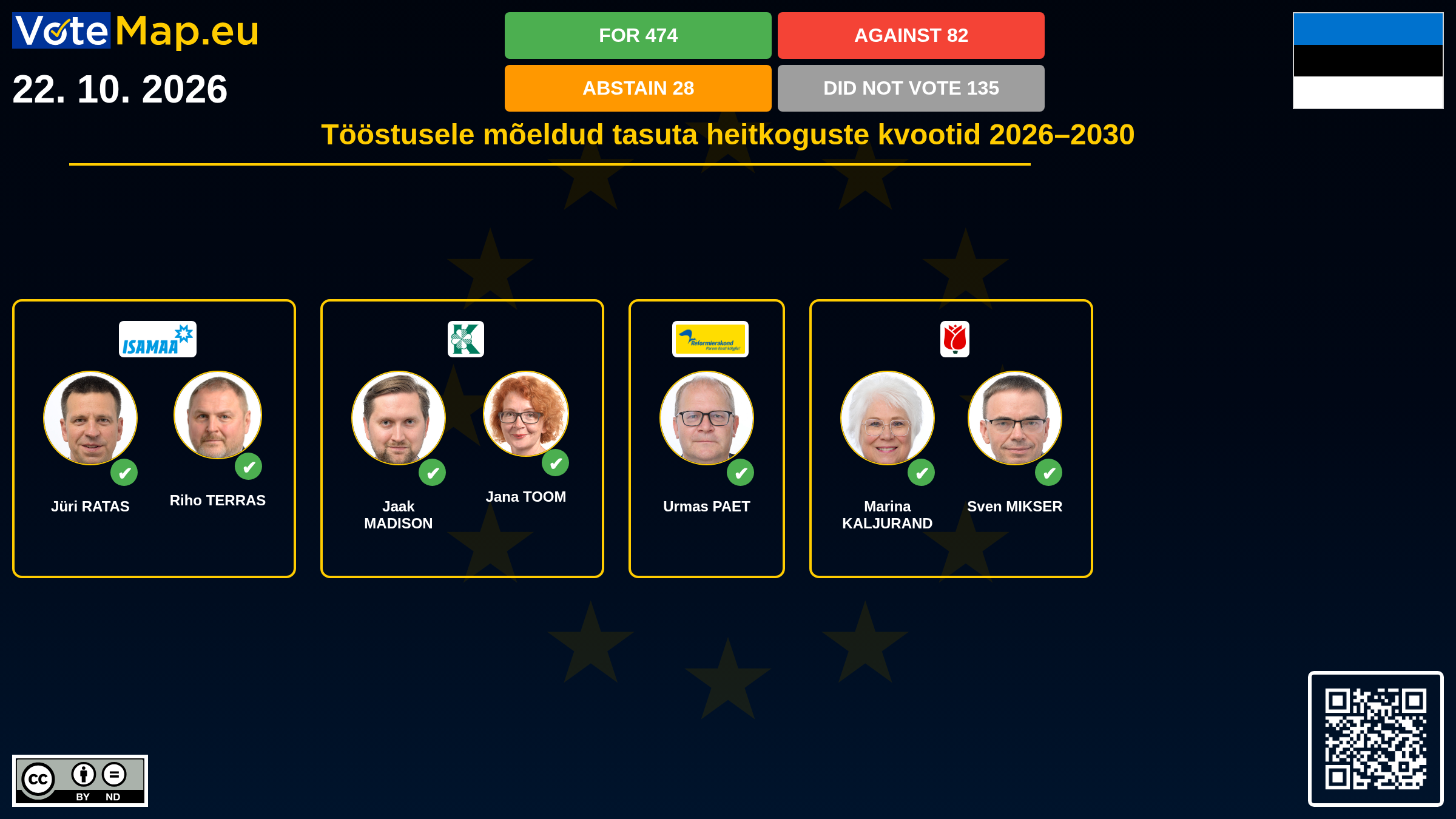
The vote concerned the EU Emissions Trading Scheme (ETS). On 17 July 2026, the Commission proposed amending Directive 2003/87/EC regarding the free allowances allocated to industry for the period 2026–2030. These are allowances allocated on the basis of the so-called fallback reference levels for heat and fuel.
The adopted text increases the number of free allowances allocated on this basis. Furthermore, a portion of the allowances that will not be allocated during this period due to the reduction in free allocation is to be channelled into the Modernisation Fund, amongst other things to modernise district heating.
Furthermore, the Commission will be able to set sector-specific reference values through implementing acts. This applies where the fuel reference level set for the Union as a whole differs significantly and demonstrably from the emission performance of installations in a particular industrial sector. According to the explanatory memorandum, the amendment is intended to provide the industry with additional protection against the risk of carbon leakage.
The approved text incorporates the adopted amendments and constitutes Parliament’s position at first reading. This is not yet the final version of the legislation; this will be negotiated with the Council.
The proposal was adopted by 474 votes in favour, 82 against, with 28 MEPs abstaining. The rapporteur was Adam Jarubas (EPP). The EPP voted in favour with the exception of one MEP (142 in favour, 1 against). The S&D (109 in favour, 1 against, 1 abstention) and Renew (64 in favour, 2 against, 1 abstention) also supported the proposal by an overwhelming majority. The Greens/EFA voted against it by an overwhelming majority (43 against, 3 in favour).
The EPP, S&D, Renew and Greens/EFA – in other words, the pro-European majority – were divided on this issue. The Greens/EFA’s opposition, however, was not limited to the final wording. All 44 of its MEPs who voted also supported a motion to reject the Commission’s proposal in its entirety. All 37 MEPs from The Left who voted cast their votes in the same way. The motion to reject the proposal was defeated by 94 votes in favour, 482 against and 1 abstention.
The EPP voted alongside the ECR, PfE and ESN, whilst the S&D and Renew also supported the motion. The ECR voted in favour (64 in favour, 1 against) and the ESN voted unanimously in favour with all 21 votes. The PfE voted mostly in favour: 55 MEPs in favour, 17 abstained and none against. The votes of these three far-right groups did not decide the outcome. Without them, the motion would have had 334 votes in favour and 81 against, so it would have passed anyway.
The Left voted against: 30 MEPs against, 7 abstentions, none in favour.
We collect and visually present data publicly available at the page of European Parliament. Votemap.eu denies any responsibility for possible inconsistencies of the data or its changes after the publication.
Descriptions are created using DeepL Translate machine translation. We apologize for any possible imperfections or inconvenience.