Achieving the UN Sustainable Development Goals by 2030
2026-07-07
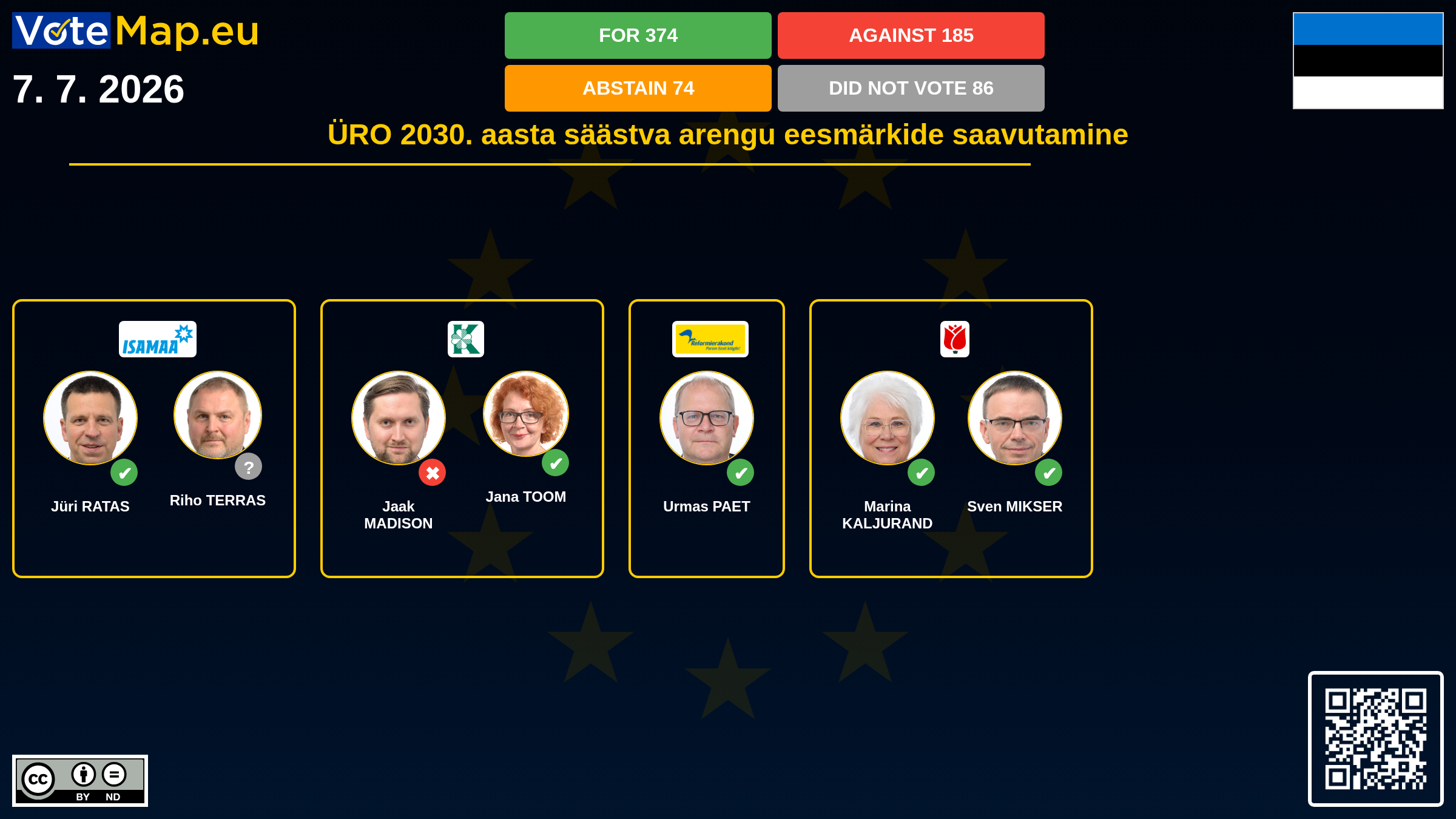
The resolution on the report by Lukas Mandl (EPP) and Pierfrancesco Marano (S&D) was adopted by 374 votes in favour, 185 against and 74 abstentions. The S&D, Renew and Greens/EFA groups voted unanimously in favour, whilst the EPP voted mostly in favour, but 39 of its MEPs abstained – primarily from the Spanish PP and the Hungarian TISZA. The ECR, PfE and ESN voted against, whilst The Left mostly abstained. The resolution calls for increased development aid and criticises the US administration’s cuts to USAID programmes.
The 2030 Agenda is a set of 17 Sustainable Development Goals adopted by UN member states in 2015. They range from water and energy to financing for development. Progress towards these goals is assessed by the UN High-Level Political Forum, which in 2026 will focus on Goals 6 (water and sanitation), 7 (energy), 9 (infrastructure), 11 (cities) and 17 (financing and partnerships). The resolution is based on a joint report by the Committee on Development and the Committee on the Environment, Climate Change and Food Security. The rapporteurs were Lukas Mandl (EPP) and Pierfrancesco Maran (S&D). This is an own-initiative report: the resolution sets out a position and calls for action, but does not amend any legislation.
According to the adopted text, only 35 per cent of the targets are on track or showing modest progress, whilst the situation has deteriorated for 18 per cent. Target 6 is in the worst state: none of its sub-targets have been met or are on track to be met. Around 2.2 billion people still lack access to safe drinking water. Among other things, the resolution calls for the phasing out of PFAS, starting with consumer goods. Where safe alternatives are lacking, their use should remain permissible. It also calls for a phase-out of fossil fuels and subsidies for them as soon as possible, and recognises the fundamental human right to housing.
On the issue of funding, the text notes that the EU and its Member States have reduced official development assistance from 0.53 per cent of GNI in 2023 to 0.47 per cent in 2024, despite having committed to 0.7 per cent. According to the resolution, the investment gap for these goals amounts to USD 4 trillion per year. The text explicitly criticises the US administration: it states that the administration has taken a number of deeply concerning and harmful decisions regarding development and humanitarian aid, in particular by suspending the majority of funding for USAID programmes. The resolution refers to analyses suggesting that these cuts could contribute to up to 14 million preventable deaths by 2030. The EU is calling for help to bridge the resulting funding gap.
The resolution was adopted by 374 votes in favour, 185 against and 74 abstentions. The S&D (120 in favour), Renew (72 in favour) and Greens/EFA (47 in favour) groups voted unanimously in favour. The EPP supported the text by a majority, with 124 votes in favour and 3 against, but 39 of its MEPs abstained. The largest number of abstentions came from two delegations: 20 from the Spanish People’s Party (PP) and 6 from the Hungarian TISZA. Three MEPs from the Slovenian SDS also abstained, as did two each from Forza Italia and the Maltese Partit Nazzjonalista, and one each from the Dutch NSC, the Polish KO, the German CDU, the Slovak KDH and the Danish Liberal Alliance.
The ECR (69 against, 1 abstention), PfE (74 against) and ESN (25 against) voted against. The Left mostly abstained (28 abstentions, 3 in favour). All four groups of the pro-European majority voted in favour; the far right voted against; and the far left largely abstained.
We collect and visually present data publicly available at the page of European Parliament. Votemap.eu denies any responsibility for possible inconsistencies of the data or its changes after the publication.
Descriptions are created using DeepL Translate machine translation. We apologize for any possible imperfections or inconvenience.