Combating VAT fraud and protecting the EU budget
2026-10-20
A non-legislative resolution on combating VAT fraud and its impact on the EU budget was adopted by 357 votes in favour, 274 against, with 31 MEPs abstaining. It was passed thanks to votes from the ECR and PfE: the EPP voted in favour, whilst the S&D, Renew and Greens/EFA voted against by an overwhelming majority. Without the 156 votes from the ECR and PfE, it would not have passed: 201 in favour, 274 against. The rapporteur was Ondřej Knotek (PfE).
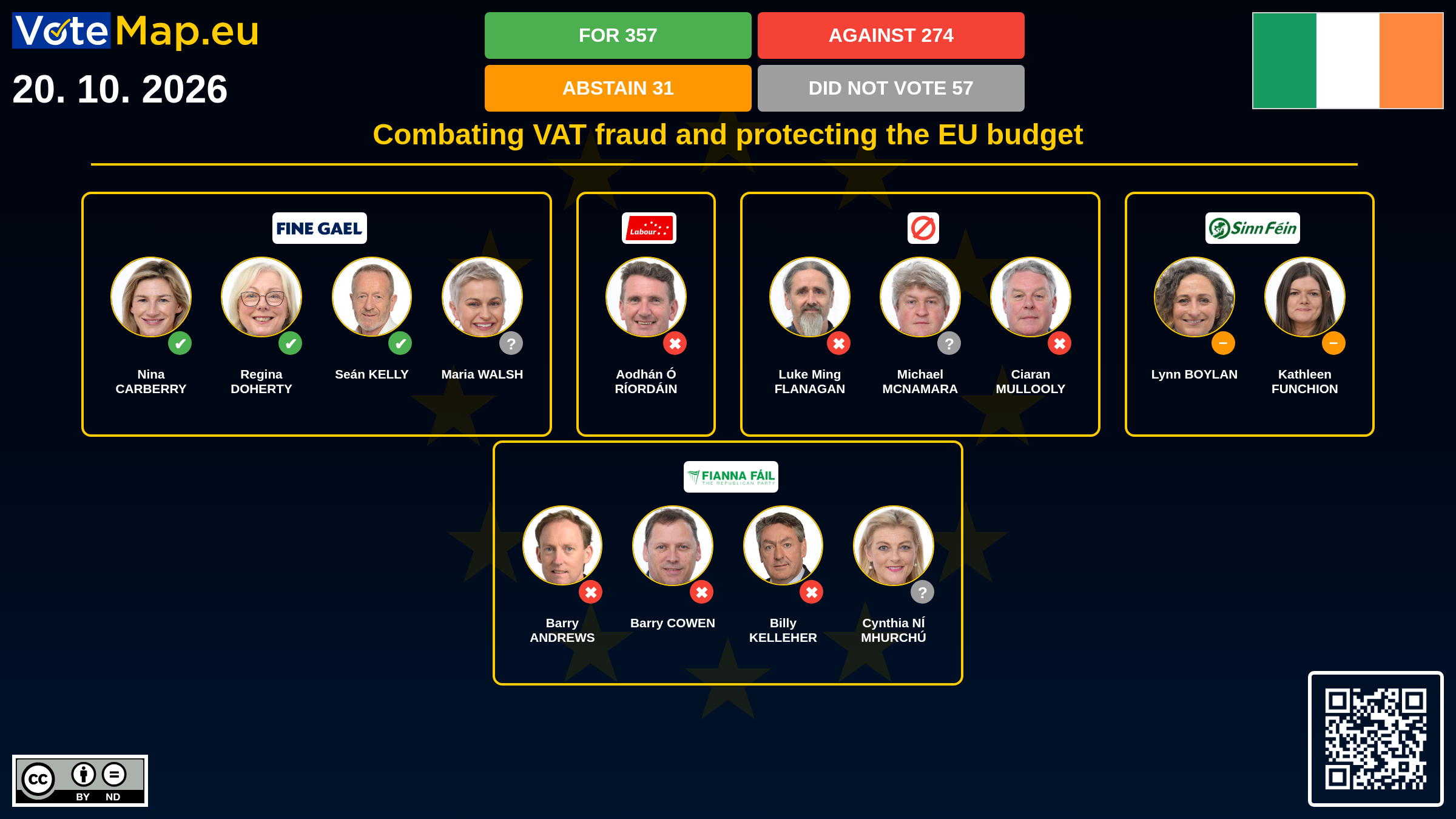
The resolution was drawn up on the Committee on Budgetary Control’s (CONT) own initiative, with Ondřej Knotek (PfE) acting as rapporteur. This is a non-legislative text: it does not in itself bring about any changes, but sets out requirements primarily for the Commission and the Member States. Among other things, it calls on the Commission to supplement its review of the European anti-fraud architecture with a specific legislative package.
According to the resolution, VAT is also a significant source of revenue for the Union: in 2024, it contributed approximately 15 per cent to the EU budget, amounting to 23 billion euros. The text cites an estimate of 128 billion euros in lost VAT revenue across the EU; carousel fraud alone is estimated to cost the EU between 12.5 and 32.8 billion euros a year. In such schemes, a so-called ‘missing trader’ collects VAT and disappears before paying it to the authorities.
The resolution calls on the EU and its Member States to ensure closer cooperation between administrative authorities, the judiciary and the police, and to establish a multilateral system that would provide early warning of carousel fraud. It calls on the Commission to lower the €10 million threshold in the Directive on the Protection of Financial Interests (PIF). It welcomes the general agreement reached in May 2026 on direct access for the EPPO and OLAF to the VAT Information Exchange System (VIES). It notes with concern that OLAF accounts for less than 1 per cent of the leads received by the European Public Prosecutor’s Office (EPPO). According to the resolution, the forthcoming legislation should ensure that the work of both offices genuinely complements one another.
It further calls on the Commission to establish rules under which money and assets seized following EPPO investigations would be returned, at least in part, to the European budget. At present, such funds go to the national treasury of the Member State concerned. It also calls on the Commission to carry out a preventive risk assessment of ‘carousel fraud’ in the second phase of the EU Emissions Trading System (ETS2). It points out that the original EU ETS was the subject of fraud between 2008 and 2009, with estimated losses of approximately €5 billion.
The resolution was adopted by 357 votes in favour, 274 against and 31 abstentions, thanks to votes from the ECR and PfE. The EPP voted in favour (164 in favour, 0 against, 4 abstentions), as did the ECR (76 in favour) and PfE (80 in favour). The S&D (7 in favour, 123 against), Renew (5 in favour, 64 against, 4 abstentions) and Greens/EFA (2 in favour, 46 against) voted overwhelmingly against. The pro-European majority thus split: the EPP stood against the remaining three groups. Without the 156 votes from the ECR and PfE, the result would have been 201 in favour and 274 against, and the resolution would not have passed. The ESN largely abstained (16 MEPs, 4 in favour, 1 against). The Left voted against (1 in favour, 36 against, 4 abstentions).
We collect and visually present data publicly available at the page of European Parliament. Votemap.eu denies any responsibility for possible inconsistencies of the data or its changes after the publication.
Descriptions are created using DeepL Translate machine translation. We apologize for any possible imperfections or inconvenience.