Global Gateway: what it has achieved and where it is heading
2026-03-26
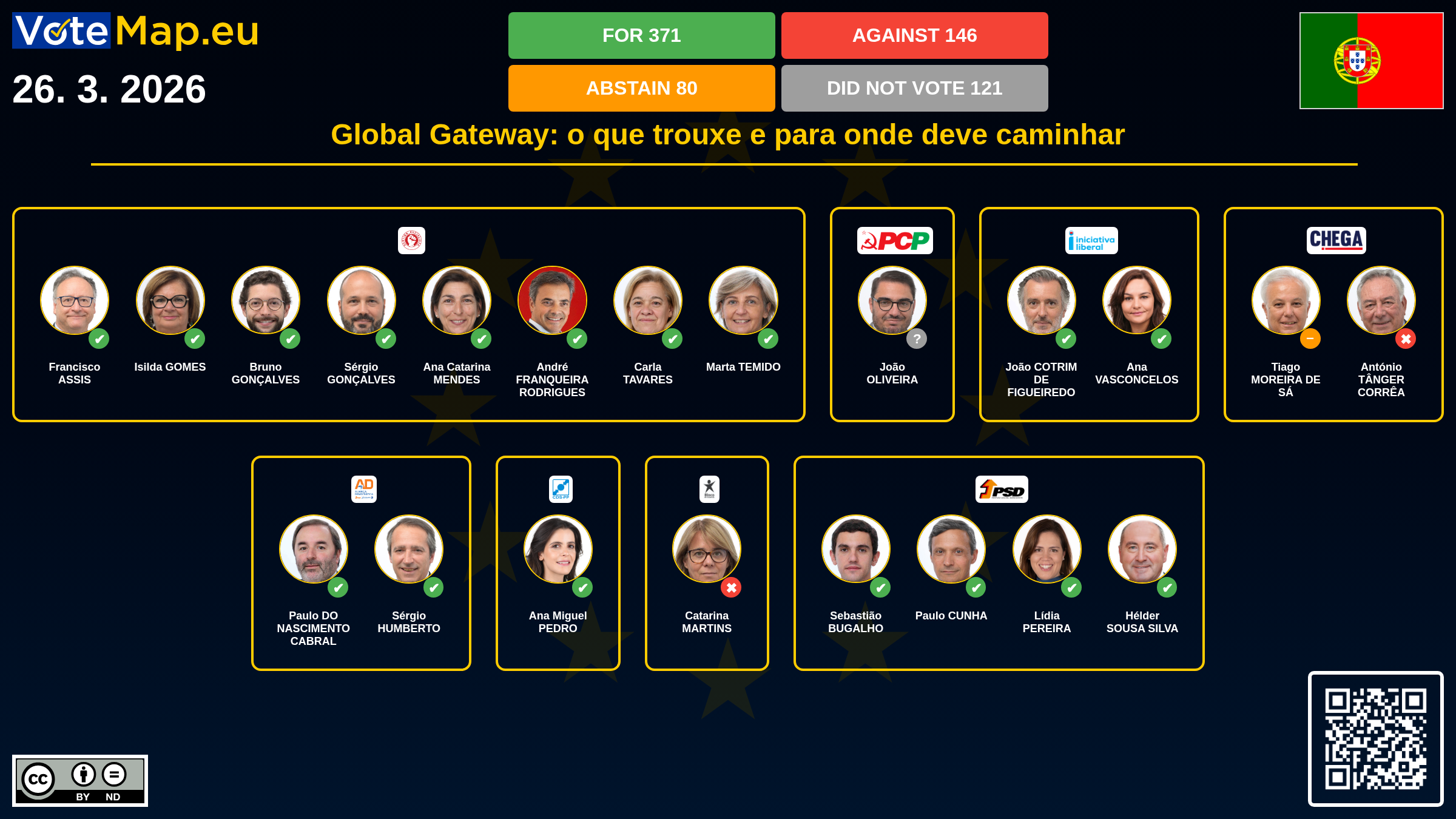
The resolution on the European investment strategy ‘Global Gateway’ was adopted with 371 votes in favour, 146 against and 80 abstentions. It was unanimously supported by the EPP, S&D and Renew, whilst the Greens/EFA backed it by a majority of their members (31 in favour, 9 against, 5 abstentions). The PfE, ESN and The Left voted against it; the ECR largely abstained. The text criticises the lack of clarity surrounding the reported €306 billion, calls for an investigation into projects carried out by Chinese companies and demands stronger parliamentary oversight.
Global Gateway is a strategy through which the EU funds projects in partner countries, primarily via the NDICI – Global Europe instrument. It is intended as an alternative to China’s Belt and Road Initiative. The own-initiative resolution, drawn up jointly by the Committee on Foreign Affairs (AFET) and the Committee on Development (DEVE), assesses its impact to date and its future direction. The co-rapporteurs were Chloé Ridel (S&D) and Hildegard Bentele (EPP).
The resolution was adopted with 371 votes in favour, 146 against and 80 abstentions. It was supported by all four groups of the pro-European majority. The EPP (157 in favour), S&D (105 in favour) and Renew (66 in favour) voted unanimously; the Greens/EFA voted by a majority but not unanimously: 31 in favour, 9 against and 5 abstentions. The votes of these four groups alone (359) were sufficient for the motion to be adopted.
We do not have any official statements from the S&D, Renew or Greens/EFA regarding this vote; we are therefore describing their positions based on how they voted. On behalf of the EPP, co-rapporteur Hildegard Bentele (EPP) spoke out on her group’s website prior to the vote. According to her, the Global Gateway is key to strengthening the EU’s strategic autonomy and competitiveness in an increasingly tense geopolitical environment.
PfE voted against (51 against, 24 abstentions, none in favour), as did ESN (24 against, 2 abstentions, 1 in favour). The ECR largely abstained: 40 of its MEPs abstained, 19 voted against and 8 in favour. The far right therefore did not speak out unanimously against the resolution. The Left (far left) voted against (24 against, 5 abstentions).
The resolution welcomes the fact that the Global Gateway is moving away from a donor-recipient model and is based on equal partnerships. However, this is critical to the strategy’s effectiveness. Since 2022, the Council has approved over 250 flagship projects, and by the end of 2024, €306 billion had been mobilised. The resolution regrets the lack of clarity and transparency regarding how this figure was arrived at.
The resolution expresses concern over reports that a number of projects are being carried out by Chinese companies. This runs counter to the aim of providing an alternative to the Belt and Road Initiative, and the resolution therefore calls for an immediate investigation into all such cases. It also points out that China is the largest bilateral creditor to many developing countries and that Global Gateway projects are also being carried out in highly indebted poor countries. It calls on the EU to reduce their debt burden and to support debt-for-nature and climate swaps.
Key projects for the period 2023–2025 were mainly focused on infrastructure. Less than 10 per cent went to education and research, and just over 10 per cent to healthcare. The resolution notes that investment in these areas could yield higher economic and social returns.
Criticism is also directed at the strategy’s governance. The Global Gateway Board was supposed to meet annually, but met only twice, in December 2022 and October 2025. According to the resolution, Parliament’s current arrangements have not allowed it to exercise oversight. It therefore recommends that the governance arrangements be revised and that Parliament be involved on the same terms as the Member States.
We collect and visually present data publicly available at the page of European Parliament. Votemap.eu denies any responsibility for possible inconsistencies of the data or its changes after the publication.
Descriptions are created using DeepL Translate machine translation. We apologize for any possible imperfections or inconvenience.